Lorebook in Silly Tavern: what is it for? Beginners and 1.17
In Silly Tavern (ST) for roleplay you will hear Lorebook or World Info—one mechanism: when keywords or rules match, a snippet is merged into the model context so it “remembers” the world without pasting a novel into the character card.
In 1.17.0, renaming improved: when you rename a lorebook file, extra book links on characters update automatically; if the book was someone’s primary lorebook, ST shows a dialog—update those primary links too, or characters may “lose” the book.
1.17 and lore: what you’ll see
- You renamed a book in the library.
- Extra references to the old name on characters switch to the new—usually without visiting each character.
- Primary lorebook is a separate field; ST asks whether to bulk-update primary links (or leave them if you are intentionally rebinding).
Separate data fields; 1.17 makes post-rename cleanup explicit.
(The rename-confirmation screenshot is being refreshed right now.)
What problem does Lorebook solve?
Think sticky notes:
- Character description — voice and identity.
- Lorebook — setting fragments you should not repeat every line: place names, factions, calendars, NPC catchphrases, “where we are in the arc.”
- On trigger, ST inserts the block into the model request (ordering and budget—advanced; defaults are enough to start).
You can play without it; long chats and dense worlds drift more without structured lore. Lorebook + tidy entries is the usual fix.
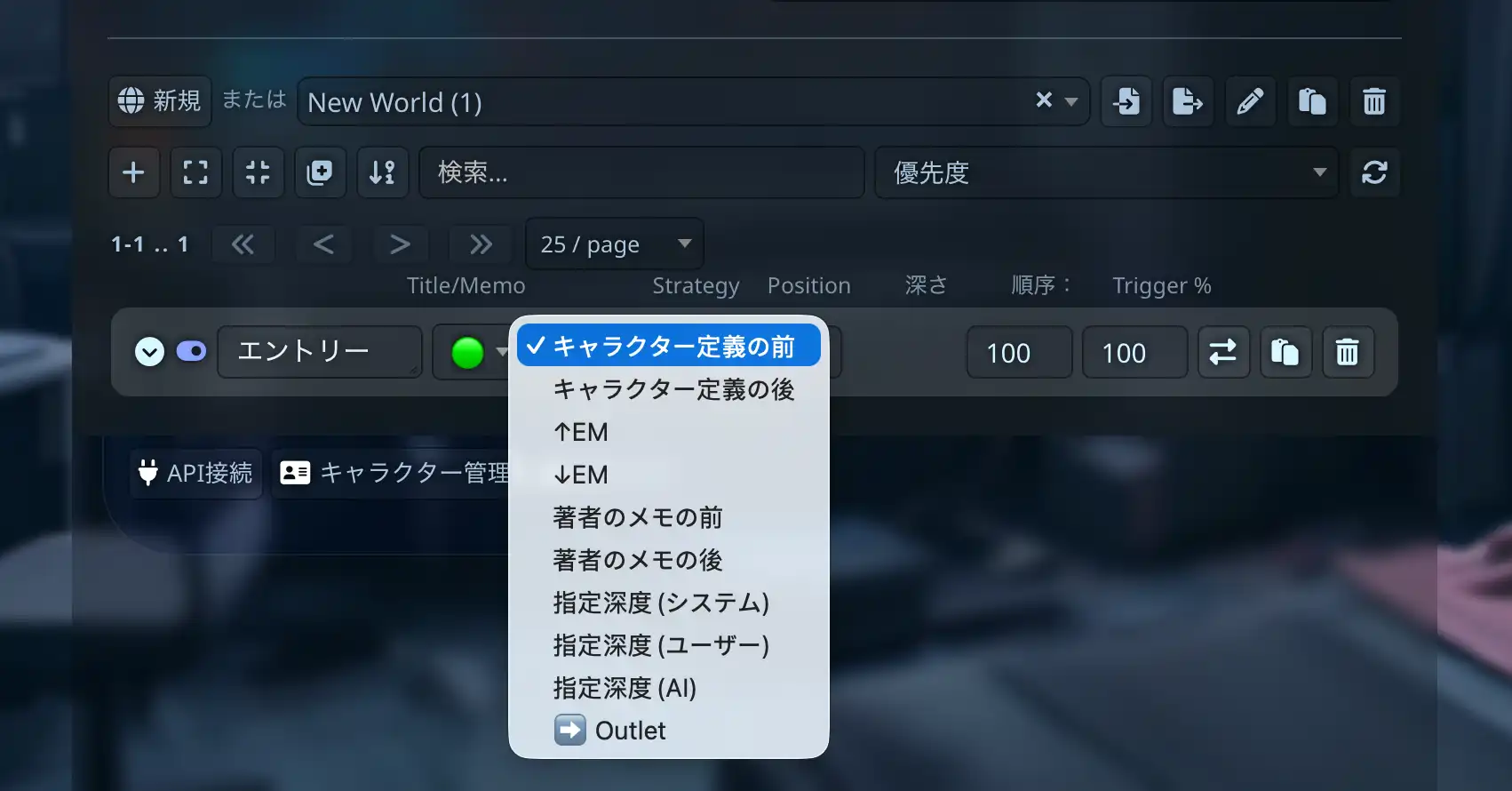
Three ideas for starters
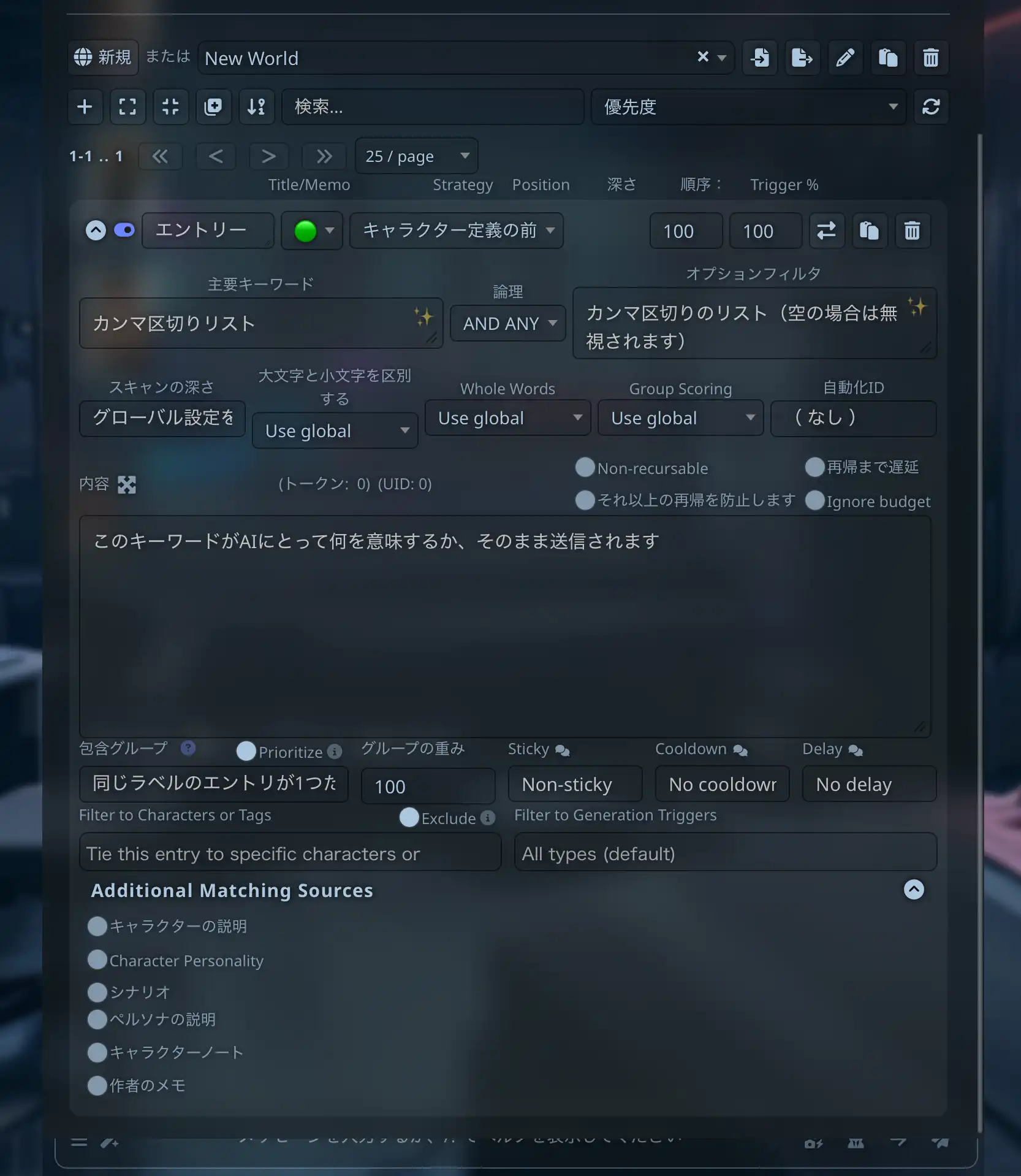
1) Entry
Usually keys / condition, body text, priority, recursion, etc. Start with a few frequent words and short blurbs.
2) Primary vs extra books
- Primary: bound to a character; opens by default with them.
- Extra: additional “layers” (global magic rules + campaign pack).
On rename, extra lists update; primary bulk change only after you confirm in the dialog.
3) Embedded lore in PNG/JSON cards
Many community cards embed lore. Import into the library and bind to the character; edit inside ST afterward. A standalone .json lorebook is another source—same idea. Empty embedded lore? Create a book and attach.
Quick start in ST
- Open World Info / Lorebook (wording depends on UI language).
- Create a book with a readable name.
- Add 1–3 tiny entries: one-line world tag, a place, a faction—triggers are words you actually type.
- In character settings, set primary or tick as extra; chat and see if the model stabilizes.
- Grow slowly—few accurate beats many fuzzy.
More sorting, budget, regex—see official docs.
Links
About the author

FAQ
Must I use Lorebook?
No—optional until long arcs or heavy setting detail hurt consistency.
I clicked “don’t update primary” after rename—now what?
Primary may still point at an old name; if the file is gone, binding breaks. If you only renamed, prefer update.
Lorebook vs regex post-processing?
Lorebook injects setting text on triggers; regex often rewrites model output. Both can coexist.
Written: March 30, 2026
Updated: March 31, 2026